

learning feeling: An Essay by Astrida Neimanis
An exploration of instincts and intuition across species, from kelp to otters to bodies beyond our own, alongside artworks by Sissel Marie Tonn.

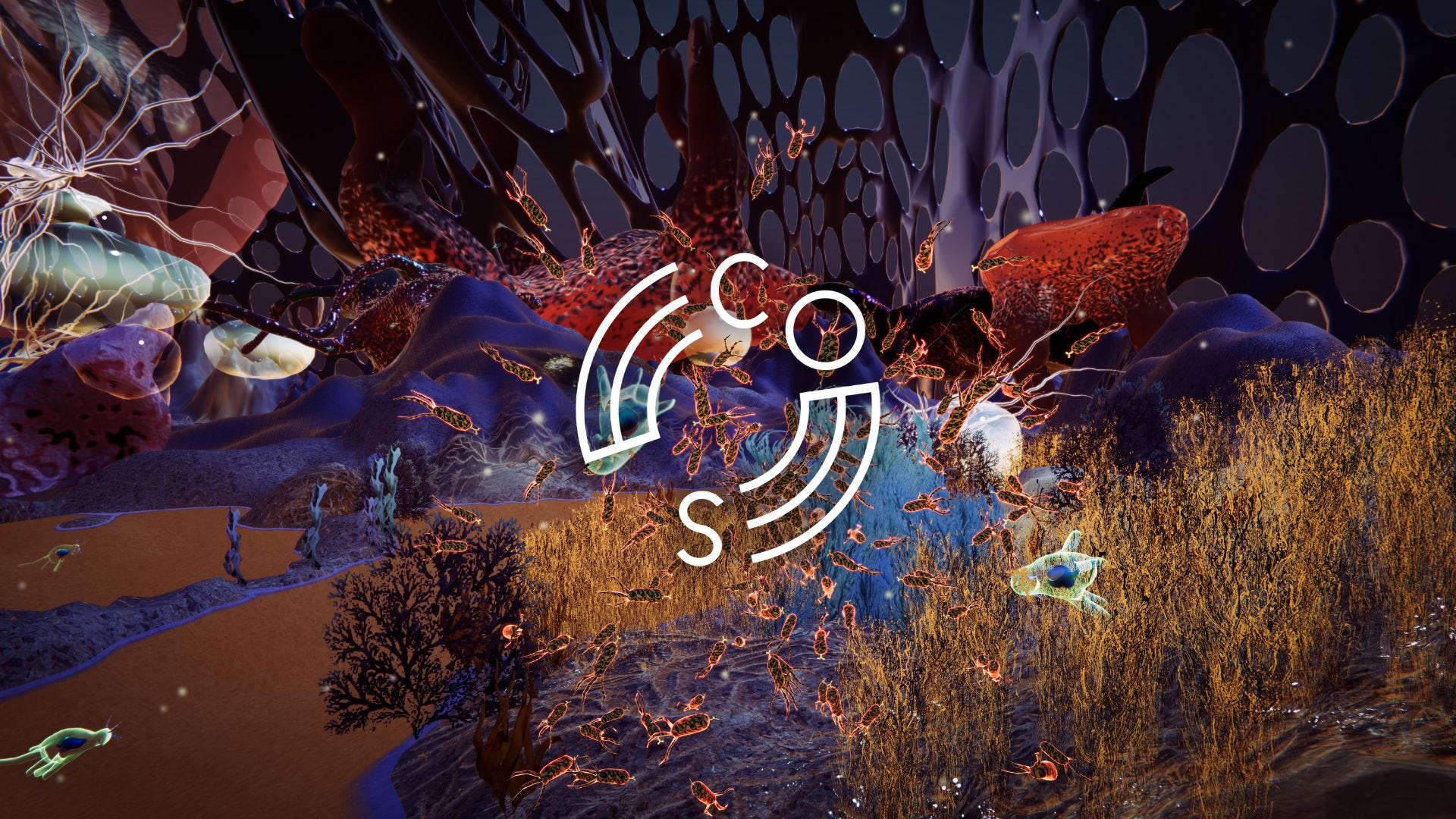
1: feeling
there are so many ways to die 1
exposed,
elementally displaced kelp feigns leather, invertebrate
life on this stretch of beach
the strength, and the sleek, of the once slipping-up limbs now wilted, give in
to the weight of the open air
lie still,
hold on
these supple arms once wrapped themselves around otter
(almost gone)
necklaces, linking hands
giants
thwarting floating
away
sinuous furling
unfurling around
densely furred flak, trying to get some rest
there cradled
now, here, on the sand to hold it between my fingers is
touching ghosts,
tonguing
a dislocated frond, vegetable tentacle
is to put your palm on the back of another beached soul (porpoise skin, whale cheek)
still breathing this
multispecies fellow feeling
as elemental as
air
as water
I remember the cold jolt, the breath-
taking arrival
everything
going
under
flashing against thinnest skin
the world is sharper in the dark
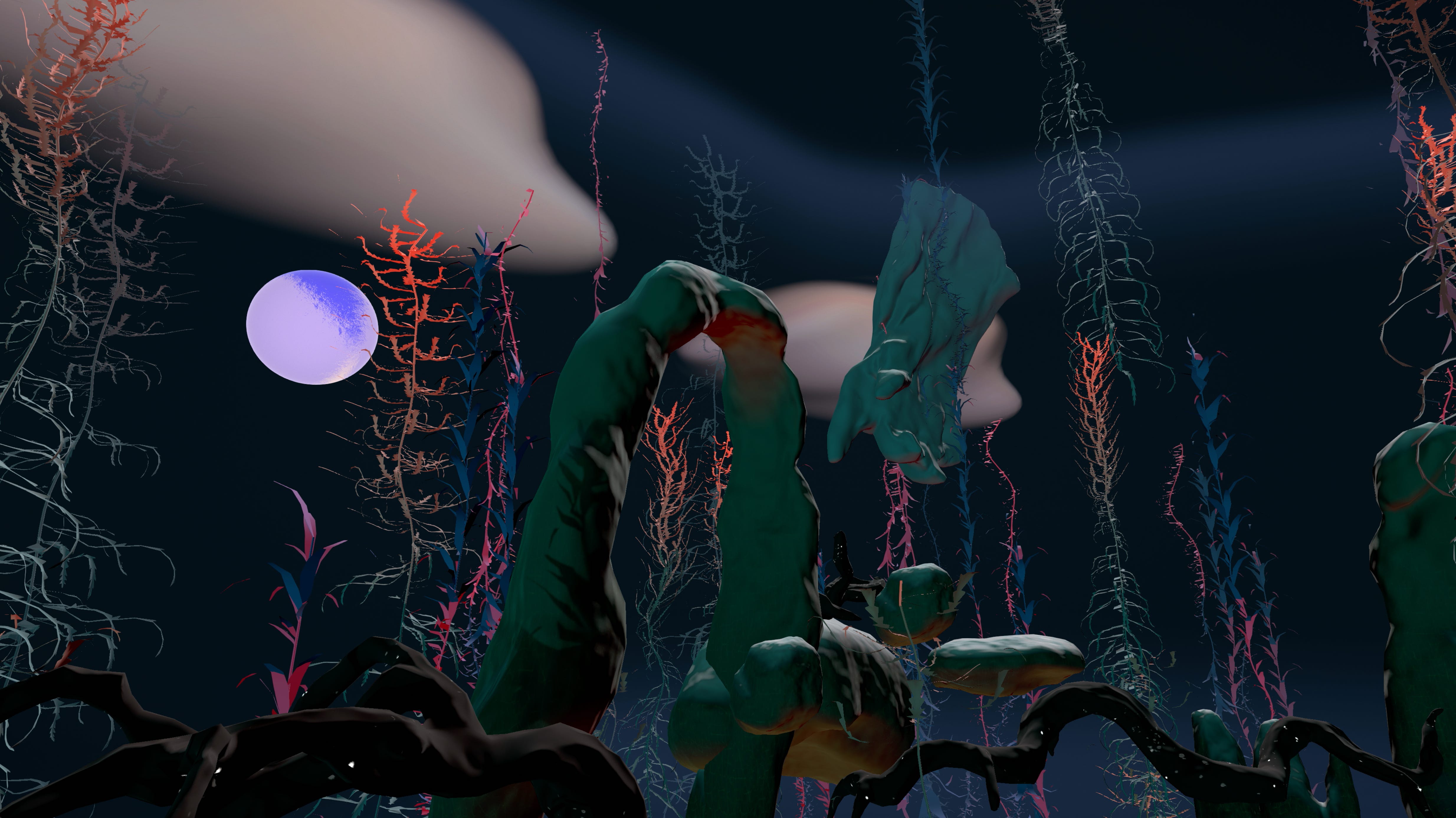
2: fellow feeling
In their feeling, other beings become known to us. And feeling is how we become alive to the world.
Human bodies learn feeling from the more-than-human world. Consider the sea otter that spins its body into the giant kelp’s grasp so that while sleeping, the otter won’t float away. The kelp forest mentors us in tenacity, vegetable pelt anchored to the bottom of the shallow sea with a holdfast. We learn about trust, and a tender squeeze. The resting body of the kelp-hugged otter, belly-up to sky, teaches us an uncomplicated dependence: how to be held even when we have left the sure tether of the shoreline behind. The seawater schools us in floating.
Our own bodies feel their way into this multispecies sympoiesis: we are the otter being held, or the kelp fingers, holding. Or maybe we are vigilant sea. Yet, imposing such language upon these more-than-human bodies is sometimes mistaken for human mastery. Always centring the human (so the theory goes), we foist a human feeling-language of our own invention onto non-human bodies whose interiority, presumably, we cannot possibly know.
This is a double-sided paranoia of both feeling and language, of both bodies and poetics. The first side erects a barrier between the feeling of our bodies and the feelings of the world. We are scolded for our anthropomorphism, which is also our anthropocentrism. I will not presume to know the feeling of a non-human other. We are made to write it on the blackboard 100 times, etching it into our habit. This first side insists on the non-permeability of feeling worlds. The second side of this paranoia is a related concern that insists the words we use to describe our own interiorities – trust, joy, love, fear, shame, grief, compassion – have no application beyond our own human experience.
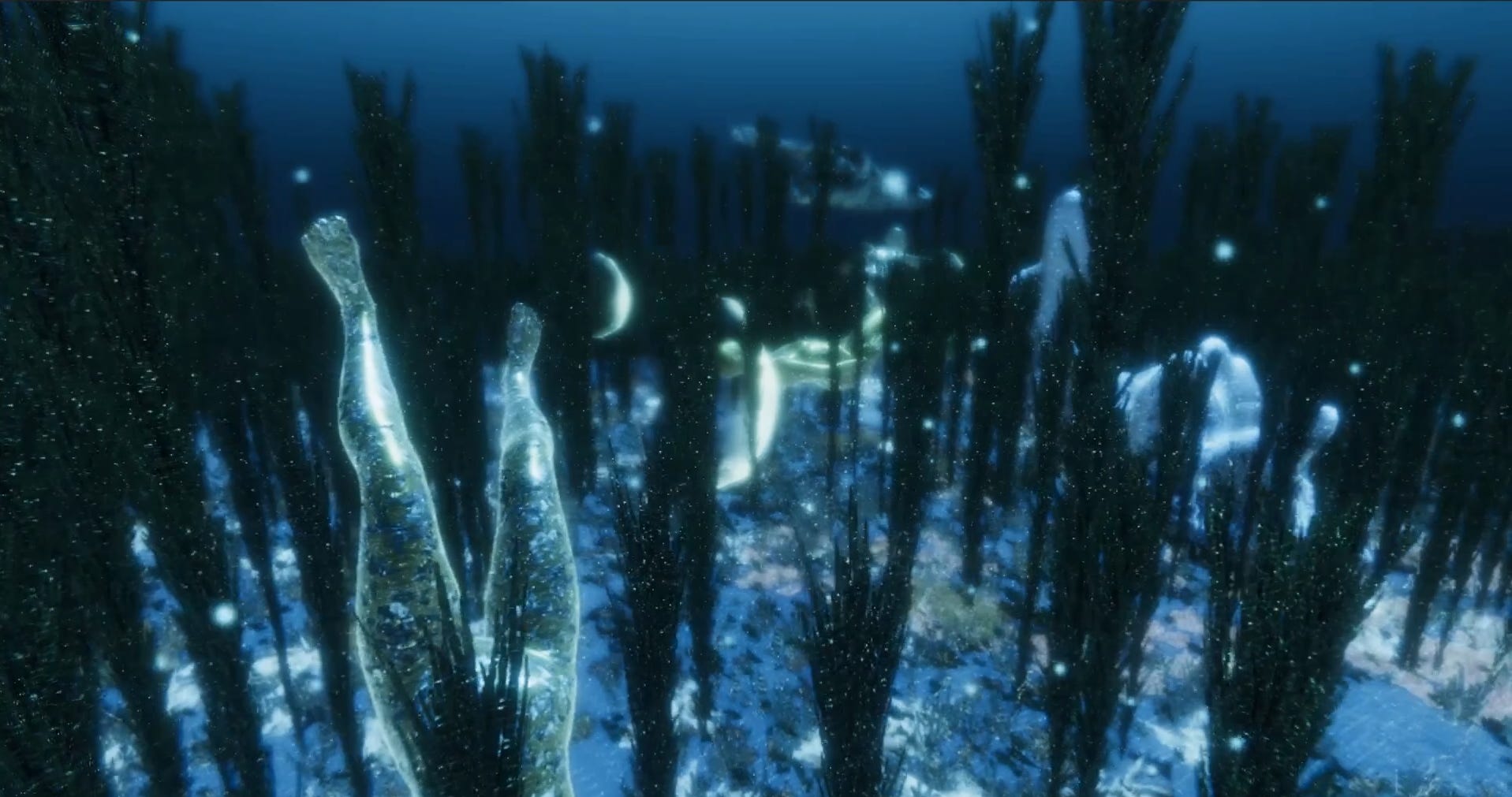
To use this language, and, in doing so, to again presume that we have access to the inner worlds of non-humans, is denounced as species-superciliousness. Such moves would presume that the world only comes alive according to our terms; we parse everything through our own frames of feeling. The second concern is thus also a claim that language was forged by us alone. Language was not something to uncover or learn. But rather: we made it, and we mastered it. Its application beyond ourselves, an extension of this power.
But what if our attribution of feeling to non-human entities, using human language, were not an extension of human mastery, but a recognition of the very source of our own affections and sensitivities in the world around us? What if this were not some anthropomorphic arrogance, but rather an elemental, multispecies synaesthesia? I feel the slippery toughness of the kelp with my tongue against the inside of my taut cheek. I feel the kelp breathing, with my palm as it rests against your stranded skin, holdfast tightening around my thumb. Am I feeling only what is inside of me, or do I touch the whole ocean? In this view, the sensory experiences of one species or body would find pathways of expression through the feeling organs of others.
3: holdfasting
Holdfasting describes the relationship between the kelp and its anchor. Neither sessile (still) nor motile (moving): these pelts are anchored in relation to another being, mussel or stone, held by lively ocean. We call the root-like structures that hold on for dear life haptera, which, related to the word haptic, is about touch. Holding, touching. Learning, feeling.
Although ‘we take emotions to be distinctly human phenomena’, writes philosopher Alphonso Lingis, ‘not only do emotions discharge their forces on the outside environment; they have their source in it’.2 In hapticity, or touch, we experience the directness of this vector: what is in the world enters us, through our semi-permeable skin. In this sense, the sea, the otter and the kelp not only belie the myth of anthropomorphism, but also the view that feeling is an internal state. Feeling is found nowhere but in the world. This is not to say that the non-human world is a vending machine of feelings, whereby we could access trepidation, or giddiness, or a deep sense of calm, or even something so seemingly factical as the slipperiness of your vegetable skin, by simply slotting in a coin and keying in the right combination. No. Feelings are no more locked up in the non-human world than they are uniquely enclosed within some interiority of the human.
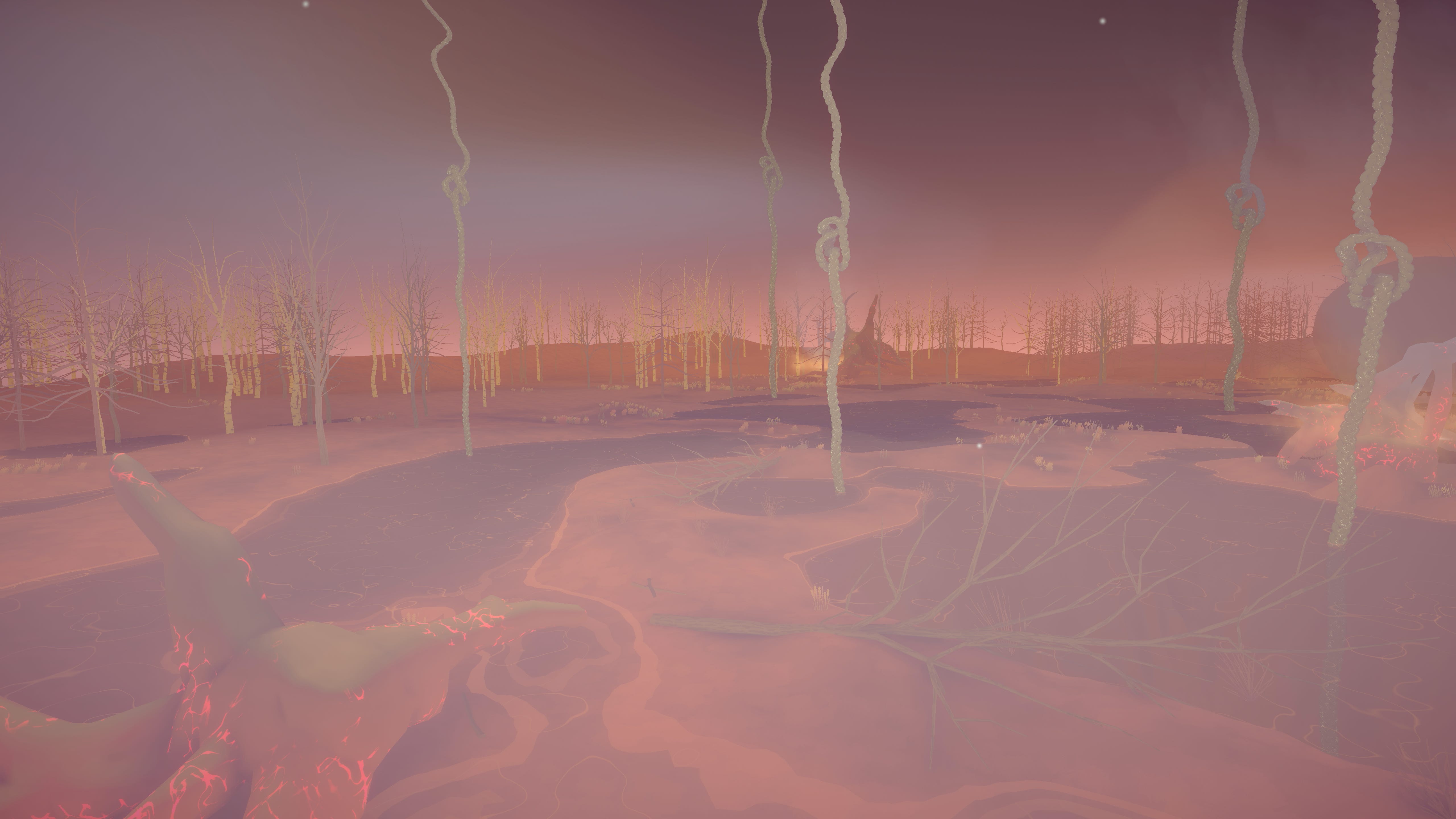
Isn’t it more accurate to say that feeling is intersubjective, or even better – intercorporeal? Feeling in this sense is a body’s way of becoming more itself in the presence of other bodies, feeling its mode of relating. Fellow feeling is the character of the milieu that a body engenders, or the orientations it encourages. It is an energetic call-and-response, a tether of connection. Rather than ‘just’ poetics, the search for adequate language to hold these phenomena is a true story of sensory learning and material relation.
In other words, what if the appreciation of a sensate more-than-human world were not a centring of our own colonising language, but rather risking decentring our human selves, as we give ourselves over to a humbling awareness of this fellow feeling? To decentre is to enter and be entered. To write a poem is to risk falling apart entirely. It requires that we refuse to see humans as the origin of language; instead, we admit that we merely participate in the sensuous languages of the world.
I neither imagine nor conjure the bereftness of an ocean bed with no forest; I feel the loneliness enter me and nestle, somewhere close to my spleen.
Even if feelings are how bodies become alive to us, this does not splay the world out before us, all feeling there for us to know. This is why language can feel inept, incapable. Human words may provide approximate markers for such feeling, but our strain for precision alerts us to the fact that we are already reaching beyond a species-specific possession and towards something larger than ourselves.
The elusiveness of a precise language is evidenced, too, in metaphor’s inevitable descent from startling recognition into cliché. For example, to call the otter playful or the ocean mysterious tells us almost nothing – we’ve all heard this before. Multispecies synaesthesia insists that we keep paying attention, for human language will rarely get it right (as in: right in the gut so that you feel the fellow-feeling in your own flesh). And even then, it will hold for only as long as it can keep the synaesthetic relation alive, which is sometimes almost not at all. This is why poetry is always a kind of magic – both spellcasting and sleight of hand.
This may also be why humans who have supposed mastery of language find it particularly difficult to catch a fellow feeling and hold it without breaking it. Too much certainty. Using human language badly, wildly, unfaithfully, or errantly, may do a better job at feeling something that is always still being translated. Our attempts to hold these complexities in language can be a humble extension of our relation to the world.
Both feelings and the words in which we hold them can come from nowhere else than the world. Feeling is bodies learning from other bodies. Learning feeling is to be in relation.
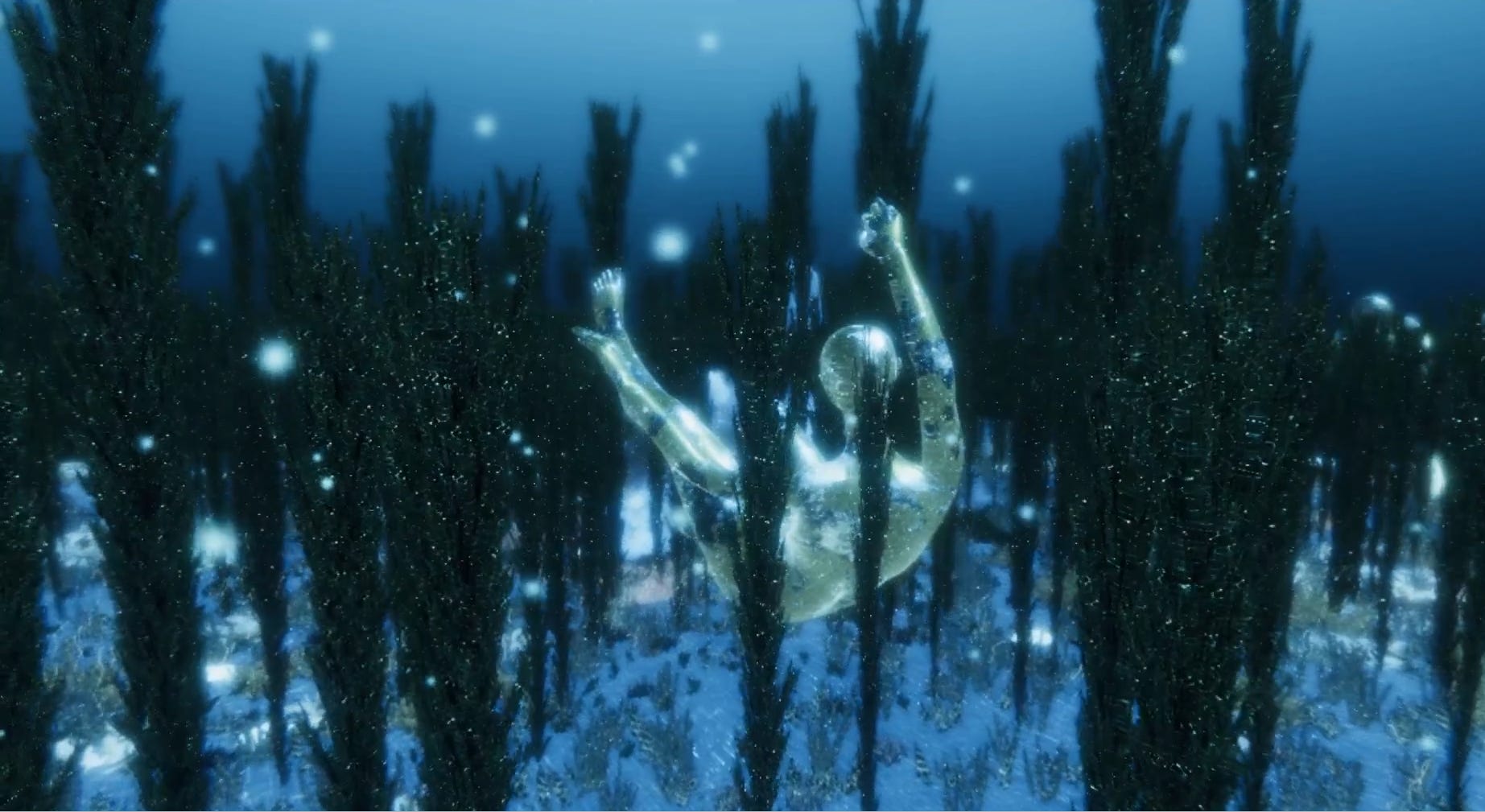
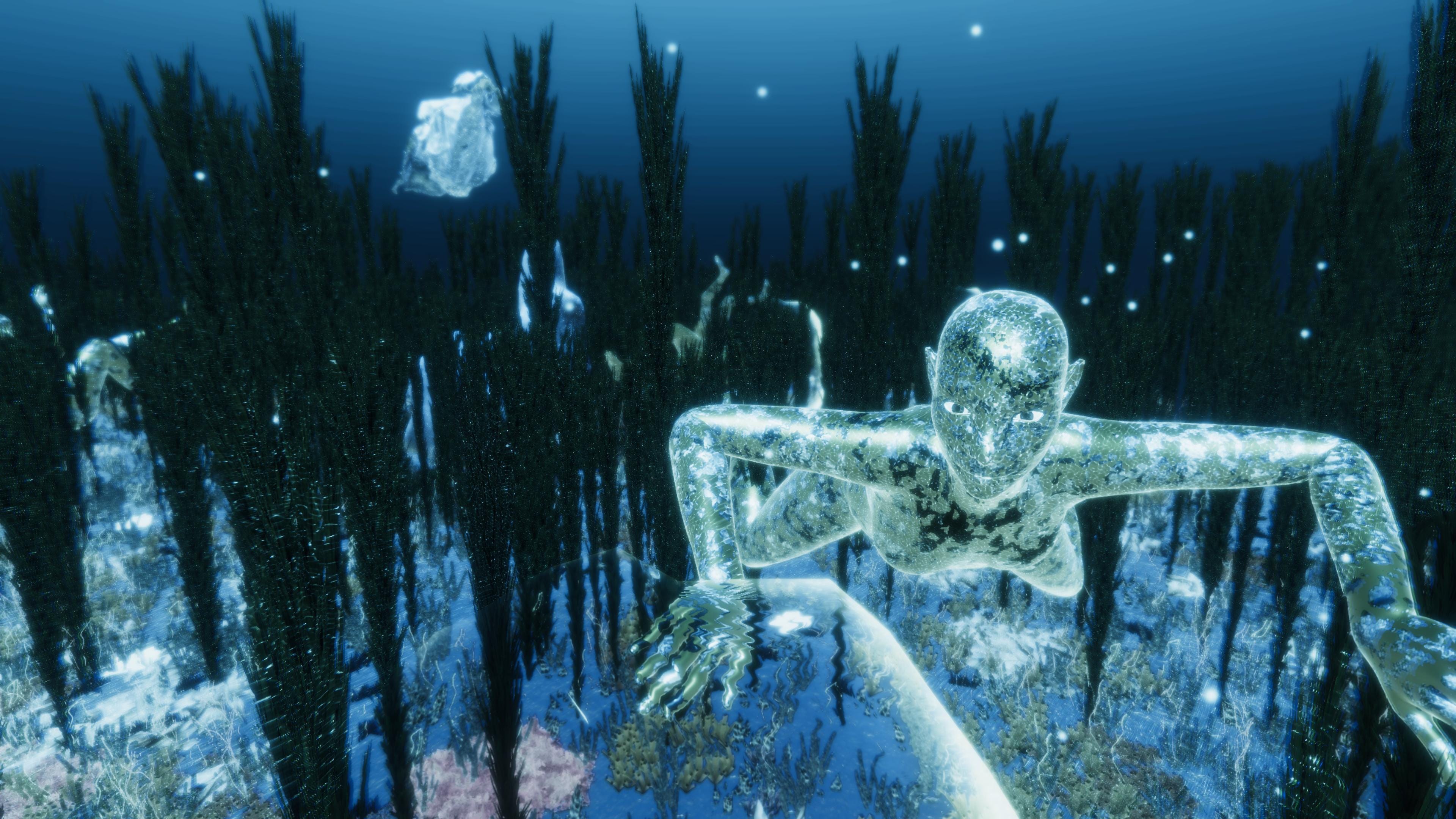
4: feeling extinction
Things are not looking great for the sea otter, nor for the majestic underwater forests of giant sea kelp, nor even for the sea. In the Pacific Northwest, these lifeways are threatened by the violences which tether them together. The cascading disasters of colonial expansion and fossil fuel extraction, leading up to contemporary manifestations of climate change, have meant, in the words of geographer Rosemary-Claire Collard, ‘a disintegration of social and ecological relations’3 for these kelp-otter-ocean ecologies. As we learn from paying attention to these relations, extinction does not entail a neat excision of a species, but the snipping of a knot tasked with complex connecting. Citing extinction studies researcher Thom van Dooren, Collard underscores this collapse as a ‘great unravelling of intimately entangled ways of life’.4
So in a time of extinction and climate catastrophe, how are we to feel? Feeling intensifies, but also loses certainty. Feeling’s temporal container is pulsing, expanding, its membrane now more porous: the past seeps in, the future jumps the gun. How can feeling anything right now not also be steeped in a feeling for what once was, in a feeling for what will or will not remain tomorrow? A singular loss echoes and anticipates others, both known and unknowable. Feeling cannot keep up with the crash of change; all feeling becomes palimpsestic and provisional. This is a differently queer time of feeling, held by the kelp, held by the otter, held by the sea – none of them holding steady.
Language, that supposedly masterful tool of Man, must always become more agile, more capacious, but also more resourceful. Words are stretched to their limits, while their labours seem more necessary than ever. What are the words that can adequately hold the shared grief of these collapsing worlds of kelp and otters and oceans? I keep pushing errant syllables around my mouth, none of them quite catching. Language, like living, also always fails.
It seems reasonable to imagine that poetics will not keep pace. Such hard work. And then what becomes of feeling in the shadow of extinction? Will this feeling, made up of relation, still circulate through our flesh, lost and looking? We know the story of the phantom limb: the leg below the knee that still aches, long after the flesh-and-bone have been separated from the body. I think about our bodies swelling up with phantom feeling, awkward and unsure. A feeling with no body to hold it, in relation.
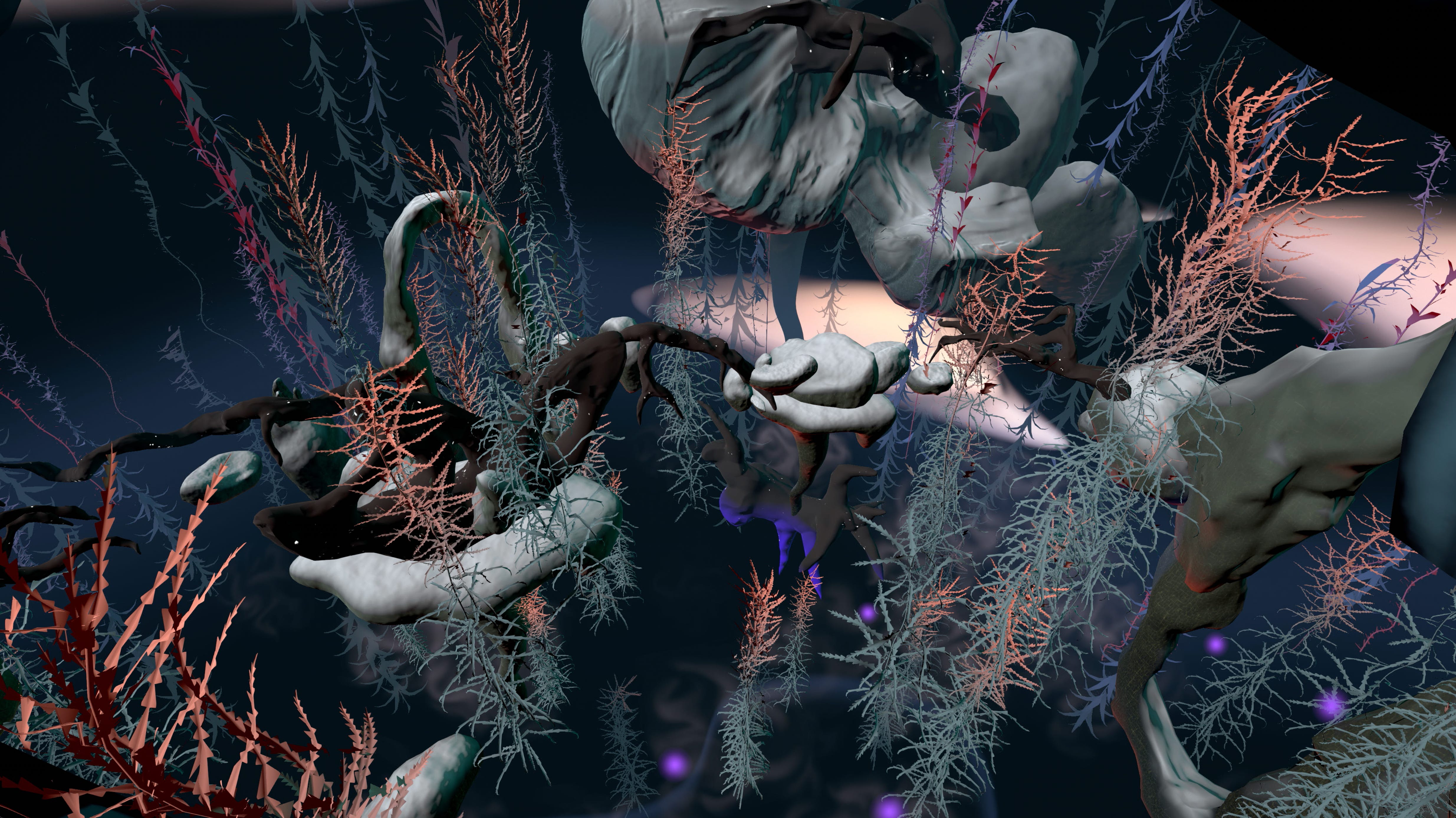
A common refrain borne of climate crisis concerns nature’s indifference to us humans. Nature will persevere regardless of humanity’s destiny, so they say, and we will have been but a bleak blip on the layer cake of time. But I wonder if the otter will miss the tether of the kelp, whether it might also feel a little less held. And I think of all of those phantom feelings, adrift at sea. How lonely the ocean would be without all of its relations – not only the otter and the kelp, but also by extension, the human who may try to feel their way through their story. I don’t know. What I do know is that the antidote to a violent touch of anthropogenic disaster cannot be an insistence that all touch be withheld. If we learn feeling from being in relation to the world, then no language will save us when those relations dissolve. The words might remain for a while as placeholders. But, as relation without relata to anchor it in the world, is some feeling unlearned altogether?
No call, no response. Hold fast. What feeling will quietly unravel as the world becomes undone?
An earlier version of a text was originally commissioned and published by AISTIT, as part of the exhibition catalogue coming to our senses (2021).
Alphonso Lingis, Dangerous Emotions (Berkeley: University of California Press, 2000), p. 18.
Rosemary-Claire Collard, ‘Disaster Capitalism and the Quick, Quick Slow Unravelling of Animal Life’, Antipode, 50.4 (2018), p. 915.
Ibid., p. 912.